

I Am Jane Doe - Poster of the Week

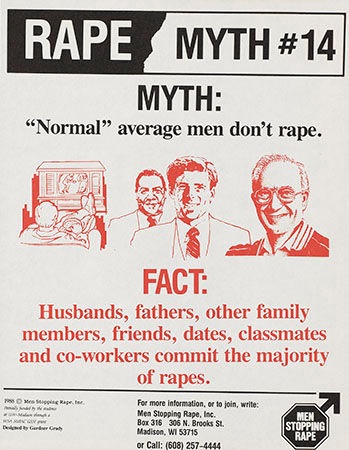
Rape Myth #14
Men Stopping Rape, Inc.
Offset, 1988
Madison, WI
87443

Rape Myth #15
Men Stopping Rape, Inc.
Offset, 1988
Madison, WI
87444
Last month, a former Cornell University student filed a lawsuit alleging that she had been gang raped by seven men at a fraternity house two years earlier. On October 19, 2024, Jane Doe was partying with her sorority and ended up at a “friend’s” fraternity house. Already very intoxicated, her “friend” and another fraternity member gave her more alcohol and pressured her into snorting ketamine.
Ketamine is a dissociative anesthetic that can induce a “state of sedation, immobility, relief from pain, and amnesia.” It is a popular drug among teens and young adults at clubs and raves, and it is frequently abused to facilitate sexual assault. While she was intoxicated, the two men began sexually assaulting her, and another joined in. Messages from the fraternity’s Snapchat group document how one member alerted the others that there was “free pussy” upstairs with a picture of Jane Doe in the room. Responding to the message, more fraternity members entered the room where they pressured her into taking more ketamine and assaulted her for hours.
Traumatized, it took three weeks for Doe to process that she had been raped, and she finally reported the crime to the campus and police. The police decided not to file any charges. In the spring, the Title IX office held numerous hearings resulting in the expulsion of two men. Two other men were suspended and were required to write essays about sexual harassment, and the Chi Phi fraternity chapter was barred from campus. The men have denied all wrongdoing.
Doe filed her complaint in New York County this September. The story reached national news, putting Cornell, the police, and the District Attorney under withering scrutiny. A solidarity campaign–“I am Jane Doe”--has emerged online to protect Jane Doe from doxxing, and with it more women have shared their experiences of being sexually harassed, assaulted, and/or raped at universities.
This case is not an isolated experience. 1 in 4 women experience sexual violence during college. Campus sexual assault is the greatest proportion of on-campus crimes in the U.S. (43%). Cases like Jane Doe’s are also preventable. 57 men were in that Snapchat group and any of them could have intervened–but none of them did. The university and the police could have held the rapists to a higher degree of legal accountability–they did not. We can all do more to call out language and actions that encourage a predatory mentality against (primarily) women. Men especially must instill a zero-tolerance culture amongst their friends and family against sexist language, attitudes, and norms.
Today’s featured posters are part of a series made nearly 3 decades ago. Instead of focusing on rape as a women’s problem, it focuses on what men’s responsibilities are, which is too rarely discussed.
No one should be abused. Abuse is not inevitable.
Stand against rape culture. Stand against Rape.
If you or someone you know has been sexually assaulted, call the National Sexual Assault Hotline at 1-800-656-4673. The hotline, run by the Rape, Abuse, & Incest National Network (RAINN), can put you in contact with your local rape crisis center. You can also access RAINN’s online chat service at rainn.org/get-help.
Take Action:
Under current New York law, a perpetrator can get away with raping someone who is too intoxicated to consent if the victim voluntarily consumed alcohol or drugs. Because the vast majority of campus rape occurs when the victim is too intoxicated to consent, this law essentially gives campus rapists a free pass. It’s time to eliminate this outdated, victim-blaming law.
References:


Comments